
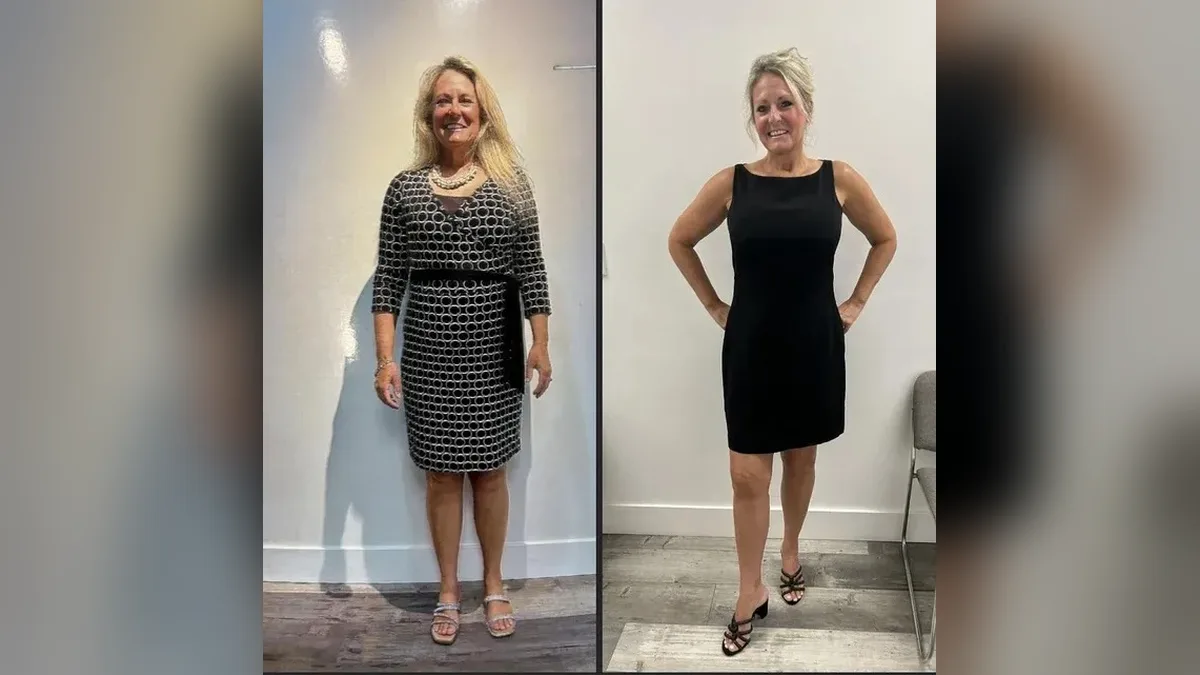
"Ozempic face" is a popular term, not a diagnosis, for a hollowed or aged-looking face after rapid or substantial weight loss from any cause [2][7]. A 2026 review of 44 studies found most were opinion pieces or reviews, with no robust prospective facial data, and the FDA labels for four GLP-1 products do not list facial volume loss among their adverse reactions [2][11][12][13][14].
Key takeaways
- Of 44 studies in a 2026 review of the topic, 27 were narrative reviews, commentaries or ethical analyses (Level 5 evidence), and its authors say no robust prospective facial-outcome data exist [2].
- A systematic review of facial changes after massive weight loss found only 14 usable reports, 11 of them on bariatric surgery, and one 5-patient abstract with objective GLP-1 data [1].
- In 65 gastric bypass patients, raters judged faces about 2.9 years older on average a year after surgery (40.8 to 43.7 years, p = 0.004), but women's change was not statistically significant [3].
- A surgeon-reported ASPS survey of 2025 found facial fat grafting volume up 39% to 34,117 procedures, but it reports no sample size and cannot separate GLP-1 effects from existing trends [8].
- The FDA labels for Wegovy, Zepbound, Ozempic and Mounjaro list hair loss but, in the adverse reaction sections reviewed, do not list facial volume loss or skin laxity [11][12][13][14].
What does "Ozempic face" actually mean?
"Ozempic face" is an informal label for a gaunt, hollowed or older-looking face that can follow substantial weight loss. It is a media and social media term, not a medical diagnosis, and not one tied to one drug.
The American Society of Plastic Surgeons (ASPS) describes it, in a June 2025 article, as a "gaunt or hollowed facial appearance" after dramatic weight loss, and says the term applies to any semaglutide medication. One surgeon quoted there describes it as a face that looks hollow, saggy or prematurely aged [7]. In a December 2023 ASPS article, a surgeon says the effect "would happen with any kind of substantial weight loss" [6].
A 2026 review in the Journal of Cosmetic and Regenerative Medicine describes the phenomenon as "a clinically recognizable soft-tissue phenotype resulting from rapid or substantial weight loss." The authors frame it as "not a drug-specific facial disease" and not a formal diagnosis, and conclude the term is useful but oversimplifies a multifactorial phenomenon [2].
The International Society of Aesthetic Plastic Surgery (ISAPS) Patient Safety Committee's June 2025 guidance likewise calls "Ozempic face," "Ozempic butt" and "Ozempic body" informal terms for tissue deflation attributed to semaglutide [9]. In this article the term is used only because readers search for it.
Do the FDA labels list facial volume loss as a side effect?
In the adverse reaction sections reviewed for this article, they do not. The current labels for Wegovy, Zepbound, Ozempic and Mounjaro do not list facial volume loss, skin laxity, sagging or wrinkles among their adverse reactions, though hair loss is listed.
- Wegovy (revised 6/2026): hair loss in 3% of adults on the 2.4 mg injection versus 1% on placebo in the weight-reduction trials. Searches of the label text for facial terms found no matches [11].
- Zepbound (revised 8/2026): hair loss in 1% on placebo versus 5%, 4% and 5% across the three tirzepatide doses studied. Searches for facial terms found no matches [12].
- Ozempic (revised 5/2026): the only skin-related postmarketing term under Skin and Subcutaneous Tissue is alopecia [13].
- Mounjaro (revised 8/2026): the same, alopecia is the skin and subcutaneous tissue item in postmarketing reports [14].
The 2026 review likewise does not describe facial volume loss as an FDA-listed adverse effect; the only FDA-related source it cites is a cross-sectional analysis of reported dermatologic adverse events, which it notes is limited by underreporting, reporting bias and no denominator data [2]. Not being listed on a label does not mean nothing happens, and it does not mean the drug is the cause. It means the labels reviewed do not name it, and the published literature treats it as a consequence of weight loss itself [2][6].
A caution on method: the keyword searches covered the portions of the label pages that could be read, and the Ozempic and Mounjaro pages were truncated near their ends, so the claim here is limited to the adverse reaction sections [13][14].
What do peer-reviewed studies report about facial fat and skin changes?
The peer-reviewed evidence is small and mostly from bariatric surgery patients, not GLP-1 users. It describes loss of fat volume and skin laxity, with the mid-cheek and neck most often named.
A 2024 systematic review in Aesthetic Surgery Journal Open Forum screened 215 records and ended with 14 usable reports (13 full studies and one conference abstract). Eleven examined surgical bariatric intervention, mainly Roux-en-Y bypass and sleeve gastrectomy. Only two papers offered opinions on GLP-1 drugs, and one reported objective data. The authors concluded that massive weight loss was associated with facial aging through fat loss and skin laxity, with the largest regional fat loss in the mid-cheek and the most notable laxity in the central neck [1].
| Report | Design and size | What it reported | Limits |
|---|---|---|---|
| Jafar et al., 2024 [1] | Systematic review, 14 reports, Level 3 | Mid-cheek fat loss and central neck laxity; one 5-patient GLP-1 abstract reported 41.8% less superficial temporal fat pad volume and 69.9% less superficial cheek fat over a mean 9.4 months, with 21.1% mean body weight loss | GLP-1 data from an abstract only; most studies qualitative or opinion; short follow-up |
| Valente et al., 2018 [3] | Prospective cohort, 65 analyzed after gastric bypass, 7 surgeon raters of photos | Perceived facial age 40.8 before, 43.7 years after (95% CI 0.58 to 2.95; p = 0.004) | Photos only; no 3D volume measures; Caucasian patients only; 1-year follow-up |
| Papoian et al., 2015 [5] | Prospective, 14 gastric bypass patients, 3 to 6 months after surgery | 6 judged older, 5 younger, 3 no significant change; mean total weight loss 20% | Very small, 9 of 25 lost to follow-up; "attractive" not defined |
| Couto et al., 2015 [4] | Retrospective pilot, 7 women with more than 100 lb loss, 11 controls, 40 blinded reviewers | Before facelift, apparent age 5.1 years above actual (controls 1.2); facelift lowered it by 6.0 years | Seven patients, female only, Level III |
The 2018 cohort is the largest. Among its 65 patients, perceived facial age rose by 2.9 years on average, with significant changes in men, in patients over 40 and in those who lost more than 75% of excess weight; the increase in women was 16.6 months and did not reach significance (p = 0.054). The authors listed the photo-only method and the 1-year follow-up as limits, and an accompanying editorial called for replication before clinical use [3].
The 2015 bypass study found the picture was not one-directional. Mild weight loss was linked to a younger look but lower rated attractiveness, and substantial loss to an older look but higher rated attractiveness, although the correlations with BMI loss were not statistically significant [5].
How strong is the evidence?
It is weak by the standards of clinical research. The 2026 review graded 44 studies from 2024 to 2026 with Oxford CEBM levels, and most were opinion-level.
Source: [2] Lee et al., Journal of Cosmetic and Regenerative Medicine, 2026 [2].
The authors state that no robust prospective facial-outcome data exist and that incidence and risk factors are poorly defined. They call for prospective studies with objective imaging and longer follow-up [2]. The 2024 systematic review reached a similar view, noting few objective volumetric measurements, small samples, short follow-up, mostly Caucasian populations, and no comparison with gradual weight loss [1].
ISAPS is equally candid. Its guidance does not grade its evidence, rests its facial statements on a review article and general commentary, says the effects on muscle tone and skin retraction are not yet fully understood, and states that its content reflects the committee's informed opinion [9].
Do age and the speed of weight loss matter?
Sources say both are likely factors, but the evidence is limited and mostly opinion. No study reviewed here compared fast with slow loss in the same kind of patient.
The 2026 review lists age, collagen and elastic reserve, photodamage and skin quality as amplifiers, and says some authors suggest muscle loss, nutritional compromise or maladaptive weight-loss pacing may contribute [2]. An ASPS article quotes a surgeon saying younger patients usually have more skin elasticity and retract more naturally, while older patients or those with reduced collagen are more likely to develop sagging and hollowing if weight drops quickly. The same surgeon calls the skin-quality link to GLP-1 drugs anecdotal and says further research is needed on collagen and elastin [7].
In the bypass cohort, men and patients over 40 showed significant perceived aging, while the change in women was not significant [3]. A surgeon quoted by ASPS recommends a pace of about one to two pounds per week, but the article cites no study for that figure [7]. The 2024 review noted the studies it found examined rapid loss and made no comparison with gradual loss [1]. These sources therefore describe plausible factors rather than established thresholds, and they do not predict what any individual will see.
What non-surgical and aesthetic options does the literature name?
The literature names fillers, collagen-stimulating injectables, energy-based devices, topical products and fat grafting, but the supporting evidence is small and uncontrolled. The 2026 review concluded that comparative trials are needed for all of them [2].
| Option | How it is described | Evidence limit |
|---|---|---|
| Hyperdilute calcium hydroxylapatite | Proposed as preventive; Level 4 report [2] | Preliminary, likely small, no comparators [2] |
| Poly-L-lactic acid and hyaluronic acid fillers | Small procedural report, Level 4 [2]; ASPS names Sculptra and dermal fillers [7] | Described as hypothesis-generating [2] |
| Endotissutal bipolar radiofrequency | Level 4 experience report [2] | Small numbers, no control group [2] |
| Topical products | Two Level 2b studies: a volumizing cream, reported to improve volume and skin health, and a topical product used with ultrasound [2] | Early studies limited by size and design [2] |
| Radiofrequency and similar tightening | ASPS describes radiofrequency for mild laxity of face and neck [6]; a surgeon in the 2026 ASPS article says noninvasive tightening still has limitations [8] | No outcome data cited in the ASPS articles [6][8] |
| Autologous fat grafting and facelift | Named by ASPS surgeons for greater volume loss or laxity [6][7] | Opinion; no controlled GLP-1 outcome data in the sources reviewed |
Fillers are regulated as medical devices. The FDA says it has approved fillers for specific uses, including moderate to severe facial wrinkles and folds, augmentation of lips, cheeks, chin and the back of the hand, and restoring facial fat loss (lipoatrophy) in people with HIV. The agency lists possible complications that include bruising, swelling and nodules, and, if a filler is injected into a blood vessel, tissue death, vision abnormalities including blindness, and stroke, which may be permanent [10]. The FDA page does not list weight-loss-related facial volume loss as an approved use.
None of these sources promises a particular appearance, and this article does not either. Results vary by person, product and technique.
What are plastic surgeons reporting about demand?
Surgeon surveys report rising interest in facial procedures among patients using GLP-1 drugs, but the data are self-reported. A September 2026 ASPS article, drawing on a survey of member surgeons covering 2025, reported that 82% received consultation requests related to GLP-1 use, including requests about facelift (71%), neck lift (64%), eyelid surgery (37%) and brow lift (19%) [8].
The same article reported that facial fat grafting rose 39% to 34,117 procedures, the largest cosmetic increase it cited, and that hyaluronic acid fillers (69%) and autologous fat grafting (49%) were the most used facial rejuvenation techniques. The article does not report the survey's sample size, response rate or methods, and consultation requests are not completed procedures. Fat grafting was already growing before GLP-1 drugs became widespread, so the article cannot separate a GLP-1 effect from the existing trend, and it contains no peer-reviewed outcome data [8].
These numbers show what surgeons say they are seeing. They do not show how many GLP-1 users develop facial changes, because they count requests, not a defined group of patients followed over time.
What this means in practice
- Treat "Ozempic face" as a description of facial change after substantial weight loss, not a diagnosis or a labeled side effect. Reviews say it is not specific to one drug [2][6].
- Expect the evidence to stay thin for now. Most sources are opinion-level, and the largest objective studies followed bariatric surgery patients, not GLP-1 users [1][2][3].
- Ask about timing and pace of weight loss, age and skin quality with your clinician, since sources name these as possible factors without giving thresholds [2][7].
- If you are considering an injectable or device, ask what evidence exists for your specific situation. The literature describes small, uncontrolled reports for the options named [2].
- Fillers are FDA-regulated devices with approved uses and listed risks, including rare serious vascular complications. Ask who will perform the procedure and how complications are handled [10].
- Do not assume a particular outcome. No source reviewed promises one, and results vary by person [1][2].
When to talk to a clinician
Talk with a licensed clinician if you are losing weight quickly and are concerned about changes in your face, skin or muscle, or if you are weighing aesthetic treatments afterward. A clinician can review the pace of your weight loss and your overall health, and can refer you to a board-certified specialist for aesthetic questions. Seek care promptly for any problem after a procedure.
At Healthy Weight Loss 4 U, every program begins with a clinician evaluation, and that evaluation is where to raise facial or skin changes, your goals and any concerns about the pace of weight loss. Whether any treatment is right for a person is a decision for a licensed clinician, and no outcome is guaranteed.
Frequently asked questions
Is "Ozempic face" a real medical condition?
Do the FDA labels list facial volume loss as a side effect?
Does it only happen with GLP-1 medications?
Does age or speed of weight loss make it more likely?
What treatments are discussed for facial volume loss after weight loss?
Are fillers approved for weight-loss-related facial volume loss?
How common is facial change in people on GLP-1 medications?
Can a clinician tell me what to expect in my own case?
Sources
- Soft Tissue Facial Changes Following Massive Weight Loss Secondary to Medical and Surgical Bariatric Interventions: A Systematic Review (Jafar et al.). Aesthetic Surgery Journal Open Forum 6:ojae069, 2024. academic.oup.com/asjopenforum/article/doi/10.1093/asjof/ojae069/7739023
- Ozempic Face: An Update and Critical Review (Lee et al.). Journal of Cosmetic and Regenerative Medicine, 2026. jcrm.jams.pub/download/article/1/2/29/pdf
- Influence of Massive Weight Loss on the Perception of Facial Age: The Facial Age Perceptions Cohort (Valente et al.; repository copy). Plastic and Reconstructive Surgery 142(4):481e, 2018. meriva.pucrs.br/dspace/bitstream/10923/21126/2/Influence_of_Massive_Weight_Loss_on_the_Perception_of_Facial_Age.pdf
- Objective Assessment of Facial Rejuvenation After Massive Weight Loss (Couto et al.; abstract page). Aesthetic Plastic Surgery, 2015. www.springermedicine.com/objective-assessment-of-facial-rejuvenation-after-massive-weight/20765078
- Effects of Bariatric Surgery on Facial Features (Papoian, Mardirossian, Hess, Spiegel; journal page, publication details not shown on the page). Archives of Plastic Surgery (e-aps.org), 2015. e-aps.org/m/journal/view.php?number=562
- Will You Need a Facelift After Ozempic? Here's What You Need to Know (December 5, 2023). American Society of Plastic Surgeons, 2023. www.plasticsurgery.org/news/articles/will-you-need-a-facelift-after-ozempic-heres-what-you-need-to-know
- How Plastic Surgery Can Address "Ozempic Face" (June 24, 2025). American Society of Plastic Surgeons, 2025. www.plasticsurgery.org/news/articles/how-plastic-surgery-can-address-ozempic-face
- The GLP-1 Effect: From Body to Face and What Happens Next (September 4, 2026). American Society of Plastic Surgeons, 2026. www.plasticsurgery.org/news/articles/the-glp-1-effect-from-body-to-face-and-what-happens-next
- The Rise of GLP-1 Receptor Agonist Drugs and Plastic Surgery, Chapter 1: Basic Knowledge and Perioperative Management (Emerging Guidance, June 18, 2025). ISAPS Patient Safety Committee, 2025. www.isaps.org/media/tw1j4oko/260522_isaps-ps-emerging-guidance_rise-of-glp-1-ra-drugs_final.pdf
- Dermal Fillers (Soft Tissue Fillers) (current as of 07/06/2023). U.S. Food and Drug Administration, 2023. www.fda.gov/medical-devices/cosmetic-devices/dermal-fillers-soft-tissue-fillers
- WEGOVY (semaglutide) injection and tablet, prescribing information (DailyMed label, revised 6/2026). U.S. National Library of Medicine, DailyMed / Novo Nordisk, 2026. dailymed.nlm.nih.gov/dailymed/drugInfo.cfm?setid=ee06186f-2aa3-4990-a760-757579d8f77b
- ZEPBOUND (tirzepatide) injection, prescribing information (DailyMed label, revised 8/2026). U.S. National Library of Medicine, DailyMed / Eli Lilly, 2026. dailymed.nlm.nih.gov/dailymed/drugInfo.cfm?setid=487cd7e7-434c-4925-99fa-aa80b1cc776b
- OZEMPIC (semaglutide) injection, prescribing information (DailyMed label, revised 5/2026). U.S. National Library of Medicine, DailyMed / Novo Nordisk, 2026. dailymed.nlm.nih.gov/dailymed/fda/fdaDrugXsl.cfm?setid=adec4fd2-6858-4c99-91d4-531f5f2a2d79&type=display
- MOUNJARO (tirzepatide) injection, prescribing information (DailyMed label, revised 8/2026). U.S. National Library of Medicine, DailyMed / Eli Lilly, 2026. dailymed.nlm.nih.gov/dailymed/fda/fdaDrugXsl.cfm?amp=&setid=d2d7da5d-ad07-4228-955f-cf7e355c8cc0&type=display
Keep reading
Loose Skin After Weight Loss: What Tightening Can and Can't Do
Read →Weight Loss After 50: What the Evidence Says
Read →Body Contouring vs Weight Loss: Who Is a Candidate?
Read →Protect Muscle During Weight Loss: What the Evidence Shows
Read →Questions about your own situation? A clinician can review your history and goals. Related: Personalized Weight Loss Counseling.